 applied acoustics
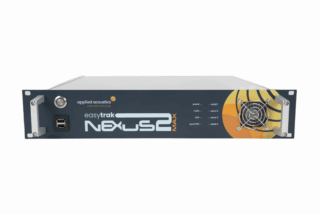
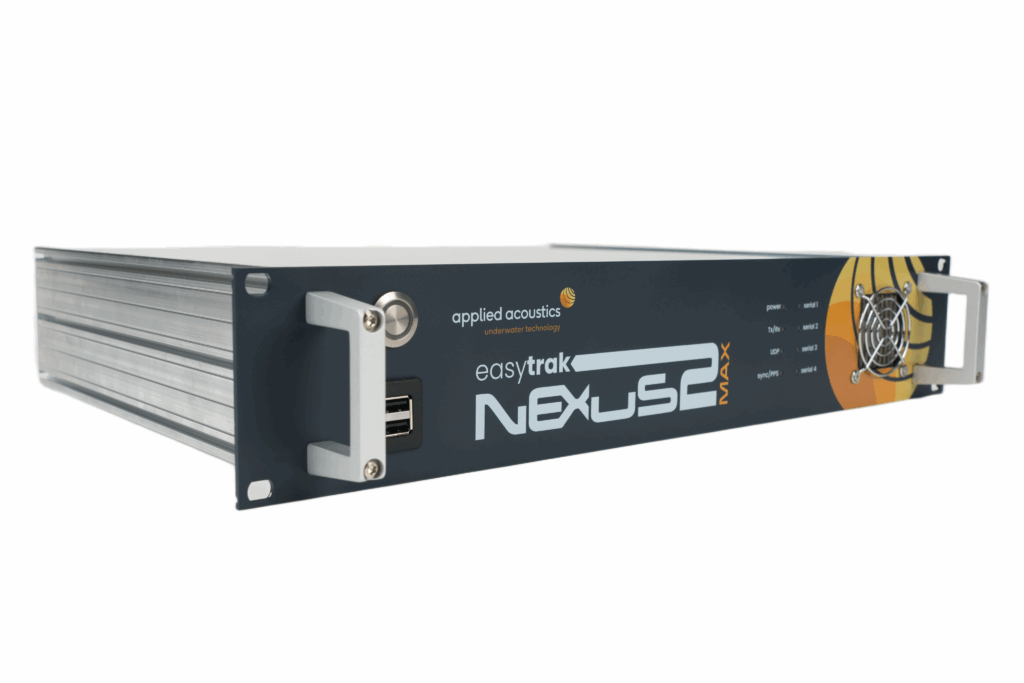
Easytrak Nexus 2 Max: Re-engineered for accuracy & efficiency

In a market where efficiency and accuracy are non-negotiable, we constantly seek opportunities for innovation.
As Ben Darling, our positioning product line manager, explains, we designed the Easytrak Nexus 2 Max to meet the exact requirements of the modern survey ship. If you’re doing complex operations in offshore wind, UXO surveys or nearshore, the demand is clear: better data, faster setup and a system built for the autonomous future.
So, what’s different about the new and improved model?
Key takeaways:
- The Easytrak Nexus 2 Max is a re-engineered USBL system that solves complex integration and timing discrepancies.
- It uses UDP inputs to enable a single-cable solution for cleaner survey operations and features interpolation for better positional accuracy over long distances.
- Designed for both efficiency and precision, the Max model supports remote operations and is built to integrate seamlessly with the increasing demands of hybrid manned and unmanned surveys.
The single-wire solution: cleaner surveys, faster mobilisations
In the past, running a survey meant having multiple cables stretching across the ship, connecting every single sensor – GPS, gyros, motion reference units (MRUs) – to your positioning system. This adds time and complexity, especially on smaller vessels where space is at a premium, or on larger ships where cables must cross different areas.
The Nexus 2 Max accepts UDP inputs (User Datagram Protocol).
“A modern survey ship pretty much runs off Ethernet,” says Ben. “This means that instead of having multiple wires for all these different sensors, it all comes in over one cable. It makes the survey space much cleaner and can be used on smaller boats with less set-up.”
You don’t need to connect a keyboard or mouse – all you need is an Ethernet lead and a power lead. This reduces operating costs, improves efficiency and enables remote surveys, so your people can spend less time offshore.
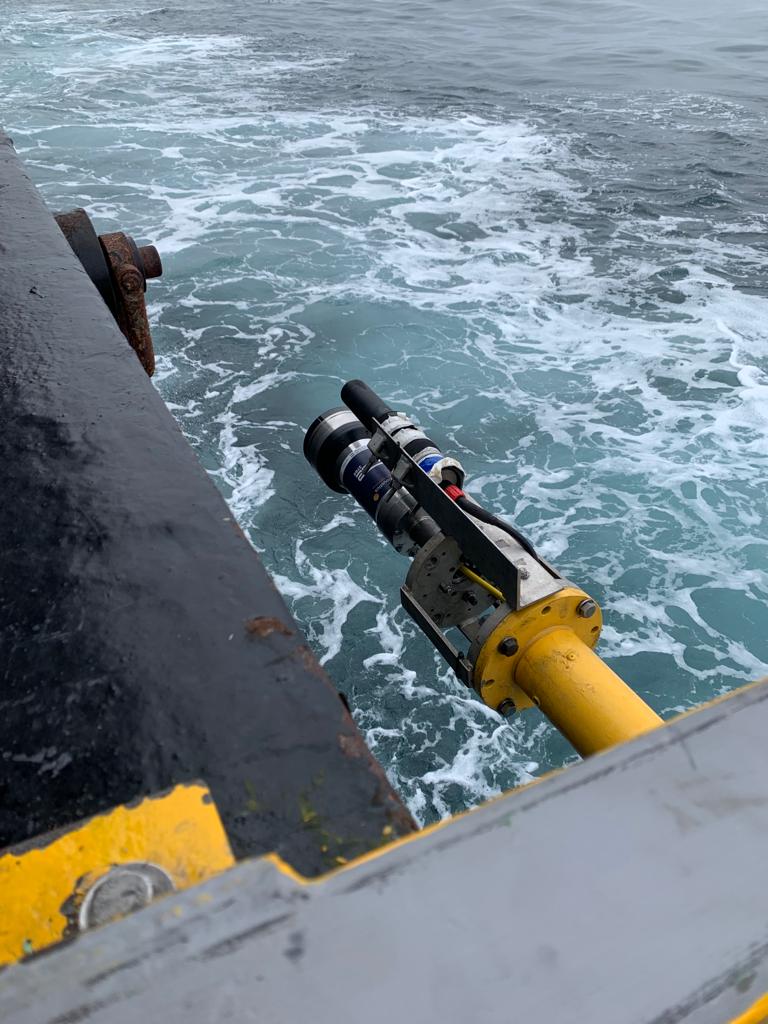
Precision engineering: how interpolation delivers real accuracy
“The other thing that we’ve done is bring in interpolation and better time syncing”.
Over the last decade, external sensors and our own acoustic systems have become so accurate that even the smallest timing discrepancies are noticeable, leading to issues like your side scan not overlaying properly.
The Nexus 2 Max introduces NTP time syncing (Network Time Protocol) and interpolation.
Previously, when sensor data (like GPS) came in slowly, we would use the positional data that was closest to the acoustic response time. Now, we interpolate the position. If you move between two sensor points, we calculate exactly where you were when the acoustic time comes in, ensuring the data is absolutely spot on.
This “under the hood” improvement has a tangible impact on data quality, particularly over range.
“It may seem small, but it improved our accuracy by up to 0.3 percent. When you extrapolate that over distance, we observed a 30 cm change at 100 meters,” Ben explains. “At 1,000 meters, that results in a 3 meter change, which makes a significant difference.””
This capability improves accuracy and repeatability.
Tools for complex operations and future-proofing
The industry is rapidly embracing hybrid surveys involving both manned and unmanned vehicles (AUVs and USVs). Our system is designed to integrate into those unmanned platforms and improve data telemetry between assets.
The Nexus 2 Max simplifies the management of complex assets by providing additional responder ports. When tracking multiple towed sensors, you can synchronise their operations and monitor assets more efficiently. We have also enhanced the responder mode, which uses an electrically triggered transmission. This mode reduces signal travel time and errors by half, making it especially useful for long-range surveys where quick update rates are essential.
Finally, we are committed to staying ahead in security. While the Nexus 2 Max currently runs on a commercially-supported version of Windows 10, we anticipate releasing a Windows 11 version in Q1 2026 and will offer a free-of-charge upgrade to any units sold between now and then.
A crucial lesson learned: check your foundations
While the Nexus 2 Max gives you precision, its accuracy depends on the right foundations.
If we could give one piece of advice to ensure the best possible results, it would be this: make sure your offsets are correct, and make sure you are regularly carrying out your velocity of sound profiles.
As Ben explains, “If your offsets are wrong… when you run in one direction, you are going to be a meter out from the real position one way… and if you then run in the opposite direction, you will be a meter out the opposite way. If you imagine you are now doing that in three dimensions, your error is going to be much larger.”
The same applies to your velocity of sound profiles, which are vital for accurate range calculation. Ensuring these two factors are precise is the key to preventing a large rig of positional points and achieving the tight cluster of data you need.
To discuss how the Easytrak Nexus 2 Max can unearth greater opportunities in your next project, contact our team today.
We can assist with initial installation, global on-site or remote training and 24/7 technical support.
Sources and reference
- Interview with Ben Darling, Positioning Product Line Manager
- Easytrak USBL System
- Nexus 2, the tried and tested USBL
- USBL Tracking in Shallow Water: Q&A with applied acoustics
- How do USBLs work?