Looking for innovation
Get in touch today
Home - Underwater GPS?
Minipods

What is underwater GPS?

What is underwater GPS?

Underwater GPS is a commonly used term for positioning solutions designed for marine and subsea operations. In practice, GPS (or GNSS) does not work underwater. Instead, “underwater GPS” usually refers to submersible GNSS units that can survive immersion and provide accurate positioning when they are at or above the water’s surface, often alongside separate acoustic positioning systems that operate underwater.

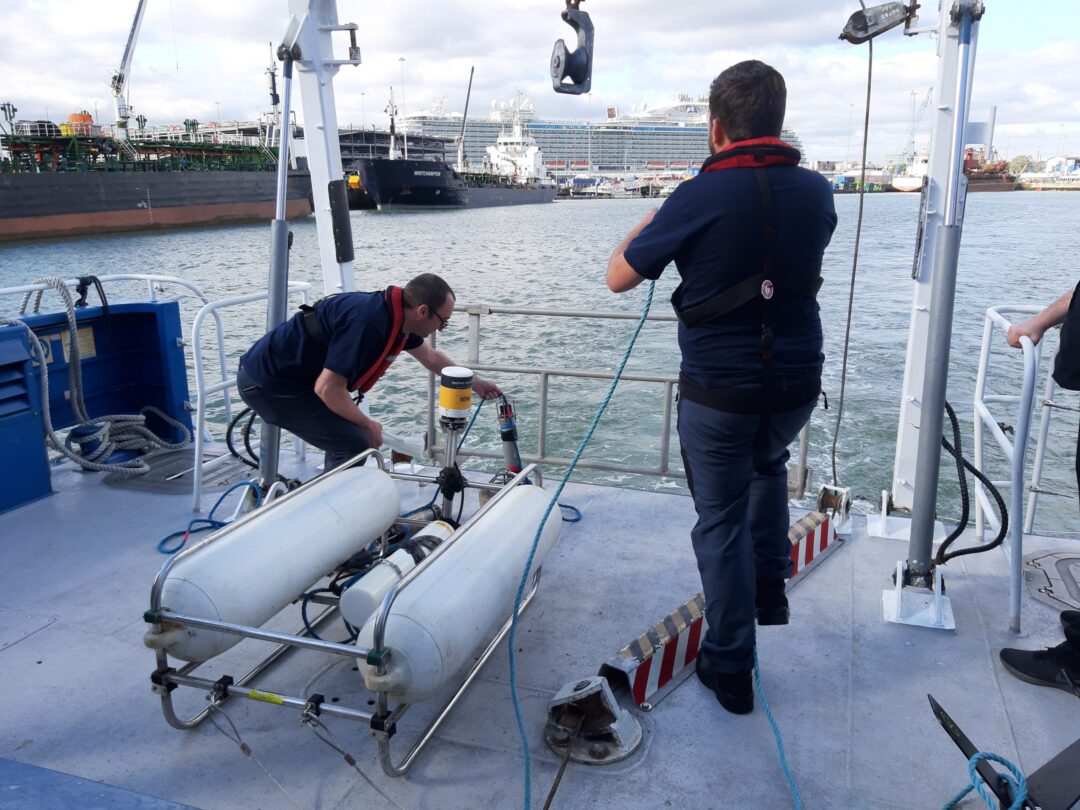
These units are ideal for subsea excavation vehicles (jetting & trenching), and surface positioning of towed sensors such as magnetometers and sparkers, operating in shallow waters.

Industrial

Does GPS work underwater?

No. Standard GPS/GNSS signals cannot penetrate water. GPS relies on radio frequencies, which are absorbed almost immediately when they hit the water’s surface. As a result, GPS positioning only works in air, not underwater.

However, submersible GNSS receivers, like our Minipods are designed to:

  • Withstand repeated immersion
  • Resume accurate positioning as soon as they surface
  • Provide seamless positioning for equipment that operates both above and below the waterline

This makes them ideal for hybrid marine operations where assets regularly surface.

What is underwater GPS navigation?

In most marine contexts, underwater GPS navigation is a catch-all term that describes how operators track subsea assets when GPS is unavailable underwater.

In reality, this is achieved by combining:

  • GNSS positioning at the surface, and
  • Acoustic positioning systems underwater, such as USBL (Ultra-Short Baseline)

These systems work together to provide continuous positioning as an asset moves between surface and subsea environments.

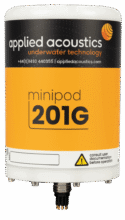
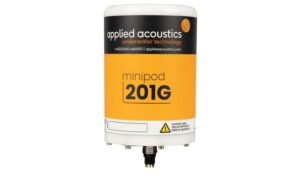
Minipod 201G

How is underwater positioning achieved?

  1. Submersible GNSS (surface positioning)

Submersible GNSS devices provide precise GPS coordinates only when above the waterline. 

What is underwater GPS used for?

  • Seismic source positioning
  • Seismic streamer head and tail positioning
  • Surface positioning of towed sensors in shallow water
  • Surface positioning of ROVs, AUVs, USVs
  • Subsea excavation vehicles
  • Vehicle recovery operations
  • Asset relocation
  • Remote asset monitoring
  • Tethered Diver Buoy

They do not transmit or receive acoustic signals.

  1. Acoustic positioning systems (underwater positioning)

When an asset is fully submerged, positioning is achieved using acoustic systems, not GPS. These systems use sound waves to calculate range and bearing underwater.

Common technologies include:

  • USBL (Ultra-Short Baseline) – vessel-mounted, fast to deploy
  • LBL (Long Baseline) – seabed transponder arrays for maximum accuracy
  • INS/DVL-aided navigation – dead-reckoning enhanced with acoustic updates

What is an underwater GPS tracker?

An underwater GPS tracker usually refers to a combined tracking solution, not a single device. It typically includes:

  • A submersible GNSS receiver for surface positioning
  • An acoustic positioning system for underwater tracking
  • Software that merges both data sources into a continuous track

This approach allows operators to monitor location in real time, even as an asset transitions between underwater and surface environments.

MiniPod GNSS receivers allow accurate subsea-to-surface communication.

How to compare submersible GNSS units?

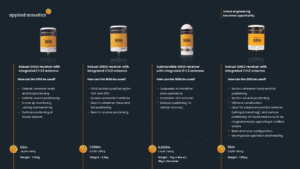
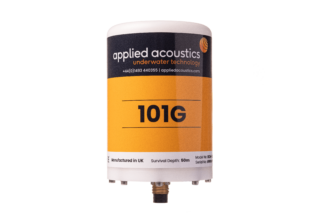
Feature 101G MiniPod 103G MiniPod 106G MiniPod 200 Series MiniPod 201G-EXT Minipod
Primary use case Smaller platforms with limited size, weight and mounting options Deep-water work-class ROVs and AUVs Deep-water work-class ROVs and AUVs Harsh operational environments such as rock cutting and cable trenching

Shock-rated up to 75G

External Antenna Minipods for towed arrays, head and tail buoys
Depth rating 50 m 1,000 m 6,000 m 201G models: 50 m 203G and 204G models: 800 m IP68

Minipod matrix

8th February, 2026 | 0 minute read
By Ben Darling, Product Line Manager (Acoustic Positioning) and Support Engineer

Ben joined applied acoustics at the age of 16, working during his college holidays. At 18 he joined the production team full time, where he built and tested acoustic positioning products whilst studying for his Electronics HND. After three years he moved into repairs, working across the product range while studying for his second HND in Business Management.

Enquire about award-winning solutions for the marine industry

    MiniPods
    Release Beacons
    Positioning Beacons
    Easytrak USBL Systems
    Geophysical Survey Systems
    Sound Source, Sparkers


    ?>